
PROTECT YOUR INVESTMENT
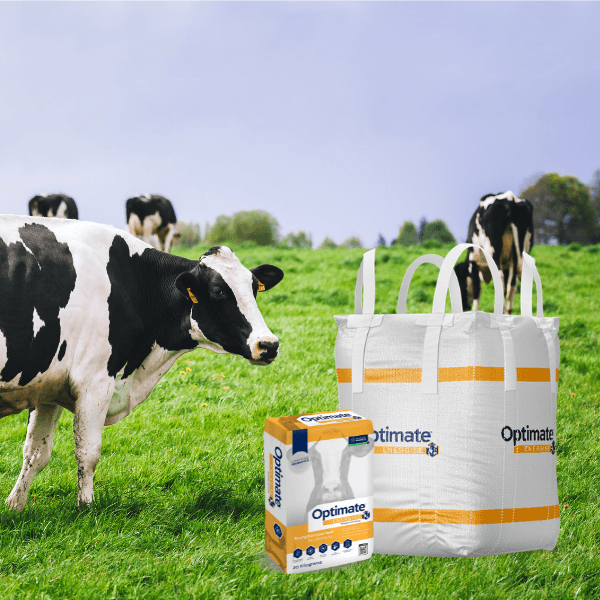
OptiMate™ Energise
SUMMER PROTECTION AT ITS BEST
OPTIMATE™ ENERGISE HELPS WITH:
Acidification via anion salts
Prepares the cow metabolically
Calcium Mobilisation BEFORE calving
WHY USE OPTIMATE™ ENERGISE?
Formulated to deliver a strongly negative DCAD
below -1600.Easy to feed dispersible granule for best results
Provides Bovacillus probiotics
WHAT IS OPTIMATE™ ENERGISE?
Optimate™ Energise is a Negative DCAD transition mineral that drives calcium mobilisation BEFORE calving. Preparing the cow metabolically, inducing mild metabolic acidosis and increasing the PTH receptor sensitivity.
Optimate™ Energise improves bone calcium mobilisation and gut calcium absorption. Reducing clinical milk fever and subclinical hypocalcaemia.
Urine pH should be testing during feeding to ensure target pH is reached for DCAD to work.
INGREDIENTS:
Optimate™ ACVM Registration Number A011800.
Per 450gm dose includes:
Bovacillus Bacteria
Macro minerals (Elemental contents):
Magnesium 30gm
Sulphur 24gm
Chloride 17gm
Calcium 7gm
Phosphorus 3gm
Trace minerals:
Organic Copper 125mg
Cobalt 25 mg
Zinc 850mg
Selenium 10mg
Iodine 32 mg
DIRECTIONS FOR USE:
Feed Optimate™ Energise to dairy cows only, 21 days pre-calving, at a rate of 450gm per cow, per day.
Do not feed to in-milk dairy cows.
pH test – Target 6-6.5 to Holstein/Friesian and 5.5 to 6 for Jersey cows. Increase dose if pH over 6.8 and reduce if below 5.50.
Avoid High K paddocks. DO NOT graze transition cows on recently effluent-spread paddocks, Heavily fertilised (KCI/potash) areas and young leafy ryegrass.
Recommended to use Straw/Hay at 30-60% of diet or other low K feeds.
Before changing rations seek nutritional advice
Available in either a 20kg or 1 Tonne bag from your rural retailer today.




Transition planning
1. Up to 50% of NZ cows develop subclinical milk fever after calving. They never go down. They never get treated. They quietly produce 7% less milk for the entire season.
2. Clinical milk fever costs you 14% of that cow’s lactation. Not the day she went down — the whole season.
3. A cow with milk fever is 8x more likely to develop ketosis or mastitis. Transition failures rarely stay single problems. They cascade.
4. Hypocalcaemic cows take 12 extra days to get back in calf and need 40% more services per conception. That’s a missed heat, more straws, and a later-calving cow next season.
5. Milk fever costs the average NZ farm ~$8,000 per 100 cows — and that’s only the clinical cases. The subclinical iceberg sits underneath it. Every 1% you shave off your empty rate is worth $10/cow in operating profit.
The transition period — the three weeks either side of calving — is the highest-leverage window of your entire season. Get it right and your cows hit peak milk hard, cycle on time, and stay in the herd. Get it wrong and you’re fighting the consequences until dry-off.